 Spectro
Spectro Team · April 30, 2026 · 4 min read
Is Juno Download Audio Lossless? Historical Guide (Store Closed 1 June 2026)
Juno Download closed on 1 June 2026. This page is a historical quality guide for existing WAV/AIFF purchases. Not a current storefront. Verify files you already own.
Status (updated 4 September 2026): Juno Download closed on 1 June 2026. It no longer sells music. Resident Advisor reported the shutdown the same day; past purchases can still be re-downloaded through existing accounts. Juno Records (vinyl at juno.co.uk) is a separate company and continues to operate. The rest of this article is a historical quality guide for files you already bought. Not a shopping recommendation for a live store.
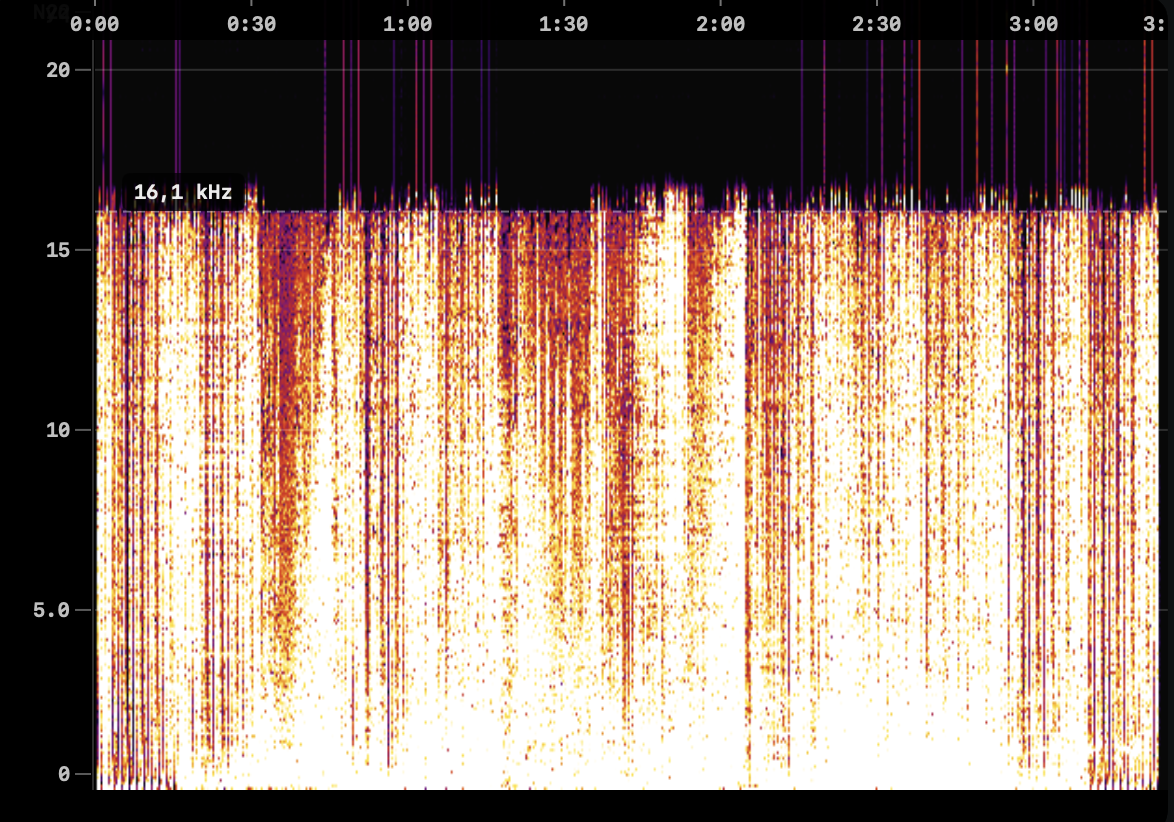
Quick Answer: When Juno Download was open, WAV and AIFF downloads were only as good as what labels submitted. Juno did not perform spectral quality verification at scale. If you still have Juno files, verify them with a lossless audio checker. Particularly older releases and smaller-label catalog.
Juno Download was one of the longest-running independent electronic music stores, with deep roots in house, techno, jungle, drum and bass, and soul. Until it closed on 1 June 2026, DJs in those genres often preferred it over Beatport for catalog depth, particularly older releases and UK-centric labels. Its WAV downloads were marketed as high quality. How reliable that quality actually was depended on the specific release. This article keeps that historical context for libraries still full of Juno files.
How did Juno Download handle audio quality?
Juno received digital masters from labels directly and through distributors. As an independent store with a long history and close relationships with many of the labels it carried, Juno's quality pipeline was arguably more curated than high-volume automated platforms.
That said, Juno did not perform spectral quality verification on every upload. A WAV that passed format validation was accepted. If the label submitted a file that was transcoded from a lossy source, it appeared in Juno's catalog and in your download as a WAV. With no indication of its actual provenance.
Which types of Juno releases carried more quality risk?
Deep catalog from the pre-digital era. Releases originally distributed on vinyl or early CD formats sometimes arrive at stores as digital files that were mastered from sources of uncertain quality. A WAV of a 1994 house track may have been digitized from vinyl at some point in its history. Which can be excellent or poor depending on how that was done.
Reissues and compilations. Licensing deals for reissues sometimes involve files that have passed through multiple hands before reaching the distributor. Quality traceability decreases with each step.
Small label catalog. Juno carried a large number of very small labels. One-person operations and micro-labels. These submitters were less likely to have professional quality control workflows.
Established, active labels: Major house and techno labels (established imprints that released regularly) generally maintained strong quality standards. Their catalog on Juno was lower risk.
How did Juno's quality compare to Beatport for the same genres?
For genres where both stores carried the same releases, quality was broadly equivalent. Both depended on the same label submissions. Juno's advantage was catalog depth for older and less mainstream releases; Beatport's advantage was volume and mainstream coverage.
Neither was spectral-verified. For any release from any store, if you care about audio quality on a professional system, verification is still your responsibility at the point of playback.
How do you verify Juno Download purchases you already own?
The process is the same as for any source:
Drag your download folder into Spectro. Each WAV, AIFF, or FLAC file receives a LOSSLESS, FAKE, or MEDIUM verdict. A weekly download batch typically scanned in under five minutes.
Check FAKE results and replace where possible. Juno is no longer selling replacements. If Beatport, Traxsource, or Bandcamp still carries the track, that may be a cleaner file. For obscure catalog, no alternative may exist. In which case, at least you know what you have.
Pay attention to MEDIUM on old catalog. For older releases, a MEDIUM verdict (cutoff in the 19–20 kHz range) may indicate a file mastered from a high-quality but not perfectly lossless source. This is relatively common with older catalog and is worth noting, even if you choose to keep the file.
Is verifying old Juno files necessary for every DJ?
For DJs who play deep catalog sets on high-quality sound systems. Particularly underground house and techno. Verification is still worth it. The genres Juno specialized in are often heard in listening environments (boutique clubs, proper sound system setups) where quality differences are audible.
For DJs who play in less critical listening environments, the practical impact is lower. Use your judgment based on the stakes.
For how to interpret scan results and the full detection method, see How to Detect Fake Lossless Audio Files on Mac. For comparison with Beatport, see Is Your Beatport Download Actually Lossless?. To check the files you still have: lossless audio checker for Mac.
Related posts
Try Spectro free
100 tracks free. No account needed. Personal $24.99 for 1 Mac; Duo $39 for up to 2 Macs.
Download the free 100-track trial